When Lilly fled Algeria, she left behind a beautiful home, a successful career, and a vibrant church community—but not her faith. Now in Philadelphia, she has formed a friendship with Rachel, a Mesa Worker. The two are praying for something new to take root: the first Kabyle Christian church in North America.
“C’est vrai? (Is it true?)” Lilly asked, showing me a news alert on her phone about Hurricane Milton approaching the East Coast.
“Oui...c’est vrai,” (Yes...it’s true) I replied, smiling weakly.
She knew that just days earlier, my hometown in Georgia had been devastated by Hurricane Helene. We laughed through our nerves and fear. Humor, after all, has a way of breaking tension.
That day, over a simple lunch at her kitchen table, Lilly was teaching me French while she strengthens her English. We stumbled through phrases, laughed at our mispronunciations in both languages, and made fun of a textbook story about “Monsieur Brown,” an American businessman we jokingly imagined as an art thief sneaking through Paris. Two women from opposite sides of the world, finding joy in our shared limitations—and shared faith.
But beneath the laughter is a harder truth: Lilly’s husband, Asafu, is in hiding here. Before coming to the U.S., he led a Christian church in Algeria—until it was shut down by the government, and he was arrested for his faith.
Lilly and Asafu are Kabyle, an indigenous Berber people from the mountains of Northern Algeria. Though the Berbers are the ethnic descendants of early church fathers like Saint Augustine, today more than 95% of Kabyle people follow Islam.
In recent years, however, a quiet but powerful revival has been growing. Tens of thousands of Kabyle people have converted to Christianity. This movement of faith has spread despite—or perhaps because of—severe persecution.
The Algerian government has closed all the official churches. Christians like Asafu and Lilly now worship in secret, risking arrest for leading gatherings, sharing their faith, or simply owning a Bible. As of this writing, 52 Christians remain imprisoned in Algeria. Some are close friends of Lilly and Asafu.
Unlike refugees, who are processed overseas before coming to the U.S., asylum seekers must arrive first and then prove their case.
When Lilly and her family came to Philadelphia, they had no safety net, no governmental support, and no legal status yet. As asylum seekers, they waited months just to submit their application and had to relive their trauma in detail on paper. After applying, they waited five more months before becoming eligible to work.
In the meantime, they depend on the generosity of friends, churches, and food banks.
Lilly and Asafu’s new reality is harsh. They live in a cramped basement apartment with mice, and their three children sleep in the living room.
“Pray for me, sister,” Lilly told me through her phone’s translator app. “I hate asking for help. In my country, I had a beautiful house and a respectable job.” When I helped her write her résumé, I learned she has an MBA and years of experience in a top business role.
Lilly and Asafu find strength in prayer and community. They’ve begun attending a multiethnic church, where believers from around the world gather for joyful, sometimes spontaneous worship.
Asafu says it reminds him of home.
“The church in Kabylia grew through prayer,” he says. “It was never about big buildings or famous preachers. Just people crying out to God.”
Even though Algeria’s government has shut down every church building, Christianity continues to spread—both underground in Algeria and among the Kabyle diaspora in France, Canada, and now the USA.
In Philadelphia, where thousands of Kabyle people now live, Lilly and Asafu dream of planting the first Kabyle church in North America. They’ve asked if they could use a nearby church’s space to gather with other North African believers for prayer, worship, and discipleship.
God willing, their dream will soon become reality.
Most Americans never meet an asylum seeker or understand what it takes to start over in a new country with nothing. But asylum seekers aren’t looking for pity—they’re looking for a place to worship freely, provide for their families, and contribute meaningfully to society.
Their story challenges us to ask:
- How can we welcome people fleeing religious persecution?
- How can the Church in America be a home for believers facing global injustice?
- Will we make space at our tables—and in our sanctuaries—for the persecuted church?
Lilly once told me, “Jésus pourvoit.” (Jesus provides.)
Even here, in a Philadelphia basement, she believes that’s true.
"Blessed are those who are persecuted for righteousness, because the kingdom of heaven is theirs.” – Matthew 5:10
Sources:
- Religious Freedom Report: Algeria, 2022.
- “The Asylum Crisis in America: A Look at the Numbers,” The New York Times.
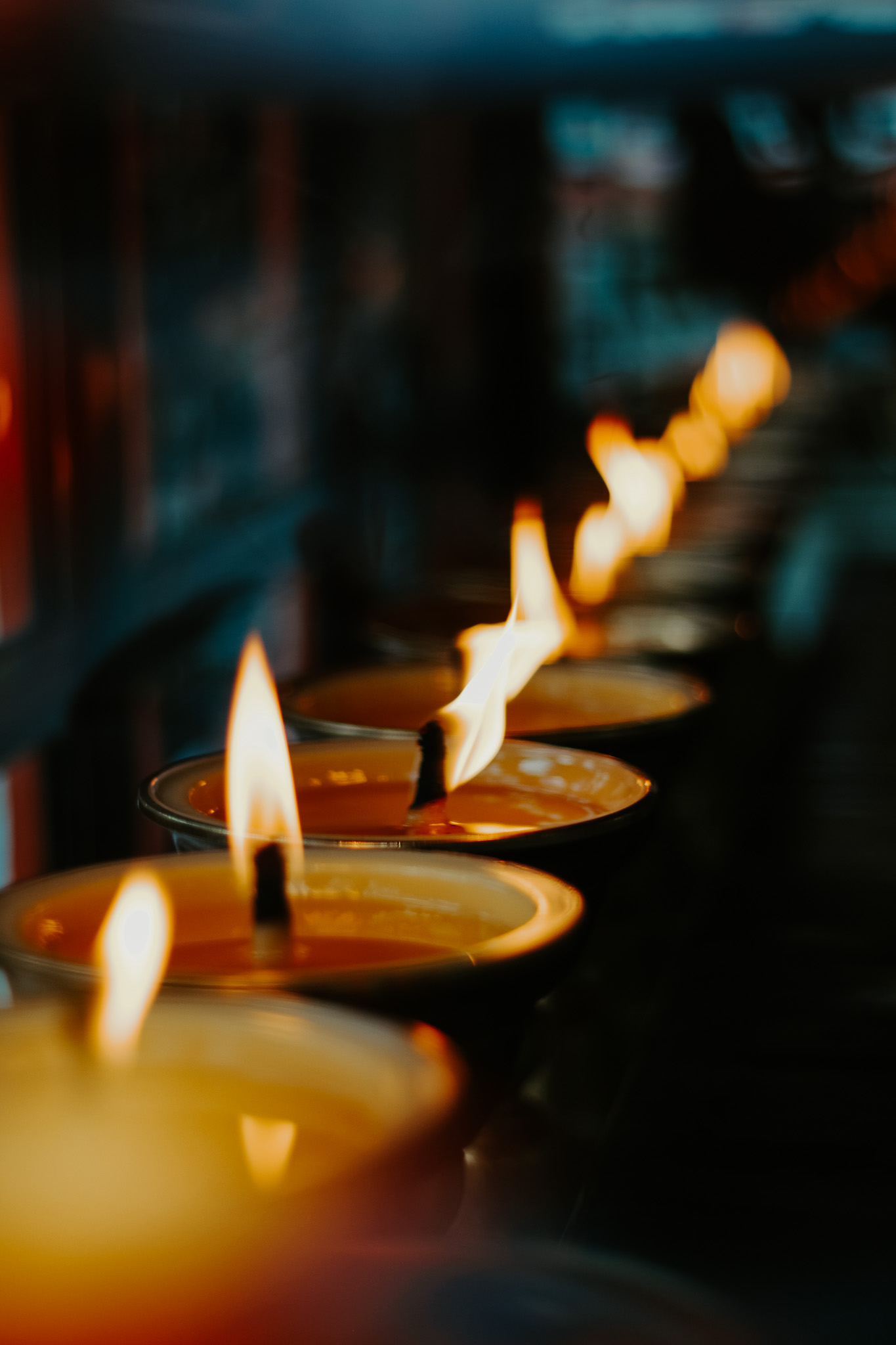
***Names changed for privacy. "Asafu" means "flame" in Kabyle.